
Hernia
Expert Surgical Repair

Very Common

Affects 1 in 4 men in their lifetime

Keyhole

Minimally invasive preferred approach

Day Case

Most repairs done same day

Robotic

Advanced precision surgery available

— What is a Hernia?

Understanding Hernia

A hernia occurs when an internal organ or tissue pushes through a weakness in the surrounding muscle wall, creating a visible or palpable bulge. Hernias are extremely common, many people notice a small lump or discomfort, sometimes recalling a sudden sensation of something giving way after coughing, lifting, or straining. Hernias do not resolve on their own and may enlarge over time.

The key risk of an untreated hernia is strangulation, when the herniated tissue becomes trapped and loses its blood supply. This is a surgical emergency. Early elective repair is therefore strongly recommended for most symptomatic hernias.

Inguinal / Femoral

Groin Hernias

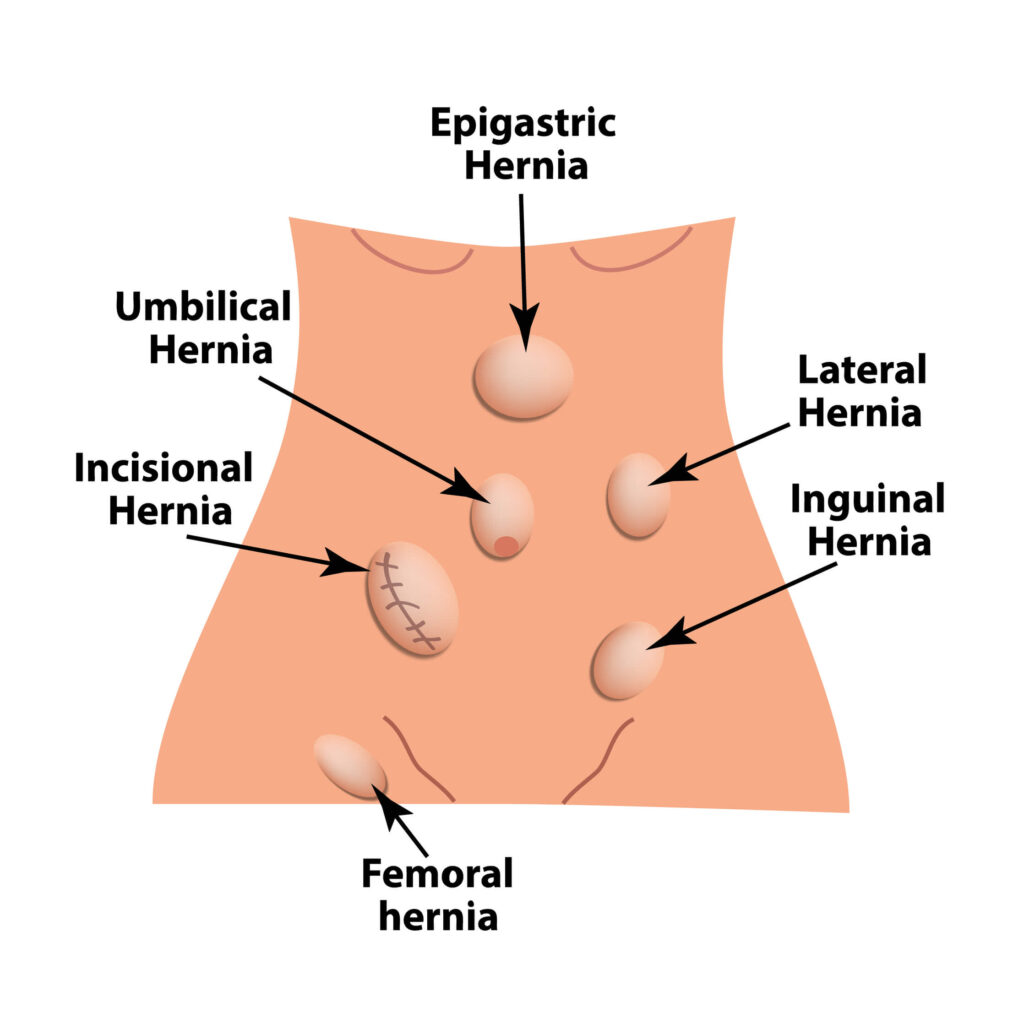
The most common type. Inguinal hernias occur through a weakness in the groin muscles; femoral hernias arise just below the groin crease. Both are more common in men.

Incisional / Ventral

Abdominal Wall Hernias

Include umbilical, paraumbilical, epigastric, incisional, spigelian and parastomal hernias. Arise through natural weak points or previous surgical scars in the abdominal wall.

— Recognising Hernias

Symptoms

🫁

Visible Lump or Bulge

A soft bulge under the skin, often more prominent on standing, coughing, or straining, and reducible (pushes back in) on lying down.

Localised Discomfort or Pain

A dragging, aching, or sharp sensation at the hernia site, particularly with physical activity, coughing, or prolonged standing.

🔴

Non-Reducible Hernia (Irreducible)

A hernia that cannot be pushed back in. This requires prompt surgical assessment as it carries a higher risk of strangulation.

🚫

Strangulation (Emergency)

Sudden severe pain, redness, vomiting and inability to reduce the hernia indicate strangulation, a surgical emergency requiring immediate attention.

🔵

Sensation of Weakness

A general feeling of weakness or pressure in the abdomen or groin, even without a clearly visible lump.

📍

Groin Swelling

Swelling in the groin that may extend into the scrotum in men, or the labia in women.

⚕ Clinical Note

A sudden increase in pain, inability to push the hernia back, vomiting, or a red, hard lump are warning signs of strangulation. Attend A&E immediately if these symptoms develop.

— Diagnosis

Investigation

1

Clinical Examination

The hernia is identified by examination in standing and lying positions. The type, site, reducibility and size are assessed.

2

Ultrasound

Used when the diagnosis is uncertain, particularly for small or occult hernias, or to distinguish between different types of groin swelling.

3

CT Scan

For complex or recurrent hernias, particularly incisional or large ventral hernias, CT provides detailed anatomical information to guide surgical planning.

— Treatment Options

Surgical Repair

1

Laparoscopic (Keyhole) Repair

Preferred for most groin and many abdominal wall hernias · Day case
  • Groin Hernia Repair An established approach for inguinal hernia repair, using mesh placed behind the abdominal wall with a quick recovery. It is particularly beneficial for bilateral or recurrent hernias, allowing both sides to be repaired through the same approach.
  • Laparoscopic Ventral Hernia Repair Umbilical, incisional and other abdominal wall hernias can be repaired laparoscopically with intraperitoneal mesh, offering excellent results and faster recovery.
  • Recovery Most patients return home the same day. Return to light activities within 1 to 2 weeks and full activity within 4 to 6 weeks.
Laparoscopic repair has significantly lower rates of chronic post-operative pain and a faster return to normal activity compared to open techniques.
2

Robotic Hernia Repair

Advanced minimally invasive technique · Superior precision for complex cases
  • Why Robotic? The robotic platform offers enhanced three-dimensional visualisation and greater instrument range of motion, allowing precise mesh placement and tissue handling, particularly advantageous in complex, recurrent, or large hernias.
  • Robotic-Assisted Hernia Repair Robotic-assisted TAPP (transabdominal preperitoneal) technique is routinely performed by Mr Kumar. Patients benefit from smaller incisions, reduced postoperative pain, and improved cosmetic outcomes. The enhanced precision can help minimise tissue trauma and support durable repair.
  • Complex Cases Robotic repair is particularly beneficial for recurrent hernias, previous abdominal surgery, large defects, or cases where conventional laparoscopy is technically demanding.
Mr Kumar is fellowship-trained in robotic surgery. Robotic hernia repair offers the same benefits as laparoscopic surgery with additional precision for demanding cases.
3

Open Repair

Conventional technique · Selected complex or emergency cases
  • When it is Used Open repair remains the approach of choice for emergency strangulation, very large or complex hernias unsuitable for minimally invasive repair, or patients where laparoscopy is contraindicated.
  • Procedure A single incision is made over the hernia site. The hernia is reduced and the defect repaired with or without synthetic mesh, depending on the hernia type.
  • Recovery Typically 4 to 6 weeks return to full activity. All options and the rationale for the chosen approach are discussed fully at consultation.
The choice of technique is tailored to each patient. Mr Kumar will recommend the safest and most effective approach for your specific hernia.

— Why Choose a Specialist?

Expert Hernia Care

Not all hernias are alike. The choice of technique, laparoscopic, robotic or open, depends on hernia type, size, previous surgery, and your individual anatomy. Specialist assessment ensures the correct repair for your hernia, performed with the lowest risk of recurrence and complications.

🤖

Robotic & Laparoscopic Expert

Fellowship-trained in minimally invasive hernia repair, including complex, recurrent and large hernias.

🎯

Full Range of Repairs

All hernia types from simple inguinal to complex incisional hernias, assessed and managed under one specialist.

Prompt Access

Most patients seen within days. Early elective repair prevents emergency presentations and complications.

Do Not Wait for a Hernia to Worsen

Early repair is safer than emergency surgery.
Book a consultation with Mr. Lalit Kumar today.

Anatomy

Types of Hernia
Quick Facts

Laparoscopic success

>95%

Recurrence rate

<2%

Return to work

1–2 weeks

Day case rate

>90%

Book a Consultation

Specialist opinion when it matters

Appointments typically within 3–5 working days.