Call : 191 767 898
By Mr Lalit Kumar Consultant Colorectal & General Surgeon
If your surgeon has mentioned minimally invasive surgery, you may have heard the terms laparoscopic and robotic used interchangeably. In fact, they are distinct techniques — and understanding the difference can help you have a more informed conversation with your surgical team about what is right for you.
Both approaches allow complex surgery to be performed through small keyhole incisions, avoiding the need for a large open wound. This means less pain, a shorter hospital stay, smaller scars and a faster return to everyday life. The key differences lie in the tools used and the degree of precision and control available to the surgeon.
Laparoscopic surgery — also called keyhole surgery — uses long, thin instruments inserted through small cuts in the abdomen, along with a small camera (laparoscope) that transmits a live image to a screen in the operating theatre. The surgeon operates while watching this screen, controlling the instruments directly by hand.
Laparoscopic surgery is well-established and has been the standard approach for many procedures for over three decades. It is used for a wide range of operations including hernia repair, gallbladder removal (cholecystectomy), appendicectomy, bowel resections and many colorectal procedures.
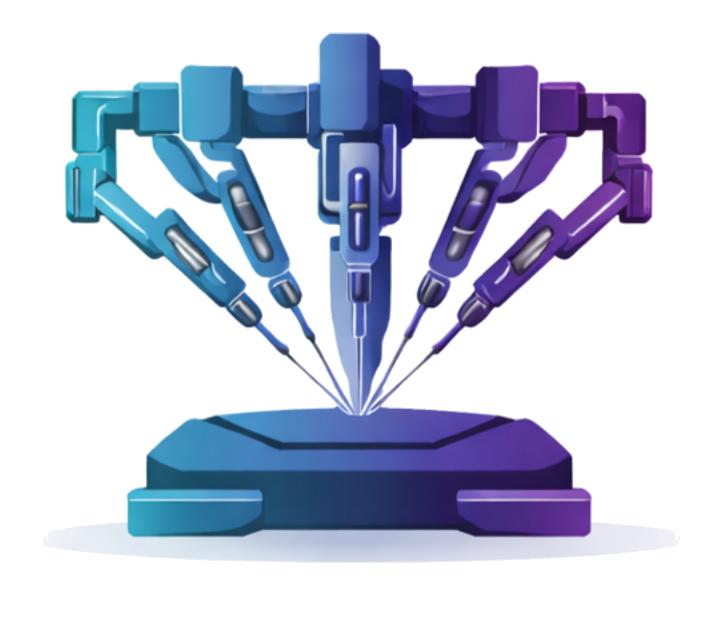
Robotic surgery takes laparoscopic surgery a step further. Rather than controlling instruments directly, the surgeon sits at a console and operates robotic arms fitted with wristed, articulated instruments. The console provides a magnified, three-dimensional high-definition view of the operative field — far superior to the flat two-dimensional image of standard laparoscopy.
The robotic system used at West Midlands Surgical Centre is the da Vinci Surgical System, which is among the most widely used and rigorously validated platforms in the world. Mr Kumar completed fellowship training in robotic surgery at two leading European centres — CHU Bordeaux and Queen Alexandra Hospital, Portsmouth — before bringing this expertise to his private practice in the West Midlands.
Robotic surgery is used for a broad range of procedures, not just cancer operations. It is equally applicable to:
The table below summarises the main practical differences between the two approaches:
| Feature | Laparoscopic | Robotic |
|---|---|---|
| Visualisation | 2D flat image | 3D high-definition magnified view |
| Instrument movement | Straight, limited range of motion | Wristed, 7 degrees of freedom |
| Tremor control | Natural hand tremor present | Electronic tremor filtering |
| Best suited for | Straightforward procedures, wide spaces | Complex, confined or delicate areas |
| Surgeon ergonomics | Standing at the table | Seated at a console |
| Patient outcomes | Excellent for most procedures | Potential advantages in complex cases |
Not automatically — and it is important to be honest about this. For many routine procedures, laparoscopic surgery produces excellent results and robotic assistance adds little benefit. The most important factor in any operation is the skill and experience of the surgeon, not the tools alone.
Where robotic surgery does offer a meaningful advantage is in complex or anatomically challenging operations — particularly those performed in confined spaces, such as deep pelvic surgery for rectal cancer or complex hernia repairs. In these situations, the improved dexterity, visualisation and tremor control can translate into more precise dissection, better surgical margins and reduced risk of injury to surrounding structures.
If you are considering surgery, it is entirely reasonable to ask:
Mr Kumar is happy to discuss all of these questions in detail at your consultation. There are no wrong questions — an informed patient almost always has a better experience and recovery.
Mr Kumar completed dedicated robotic surgery fellowships at two of Europe’s leading centres — CHU Bordeaux, France and Queen Alexandra Hospital, Portsmouth. He has performed robotic hernia repairs, cholecystectomies, colorectal resections and rectal cancer operations, and continues to offer robotic surgery to appropriate patients at his private practice in the West Midlands.
As with all surgical decisions, the choice of technique is guided by what is best for each individual patient — not by what is newest or most technologically advanced.
Delivering high quality, patient-focused care
© 2025 West Midlands Surgical Centre. All rights reserved. · Privacy Policy · Terms & Conditions This website provides general information only and does not constitute medical advice. Always consult a qualified clinician.