
Change in Bowel Habit
Persistent change in the frequency, consistency or pattern of bowel motions lasting more than three weeks, particularly in adults over 40.
Call : 191 767 898
For large bowel examination
Procedure duration
Polyps removed at the time
Available for comfort
Colonoscopy is considered the gold standard investigation for the large bowel. It is both diagnostic and therapeutic, meaning problems can often be identified and treated in a single procedure, without the need for separate surgery.
Persistent change in the frequency, consistency or pattern of bowel motions lasting more than three weeks, particularly in adults over 40.
Blood in or on the stool, or fresh rectal bleeding, always warrants colonoscopic assessment to exclude a significant cause.
Unintentional weight loss in association with bowel symptoms is a red flag requiring urgent investigation.
Patients with a history of colorectal polyps require regular colonoscopic surveillance to detect and remove any new polyps before they become cancerous.
Those with a first-degree relative diagnosed with colorectal cancer under the age of 60 are recommended surveillance colonoscopy.
Iron deficiency anaemia without an obvious cause may indicate occult blood loss from the large bowel, requiring colonoscopic assessment.
In the days before the procedure, you will follow a low-residue diet and take a bowel preparation solution to clear the colon completely. Clear bowel preparation is essential for a high-quality examination.
Most patients opt for intravenous sedation, which produces a relaxed, drowsy state. You will be comfortable throughout and have little or no memory of the procedure. Unsedated colonoscopy with Entonox (gas and air) is also available.
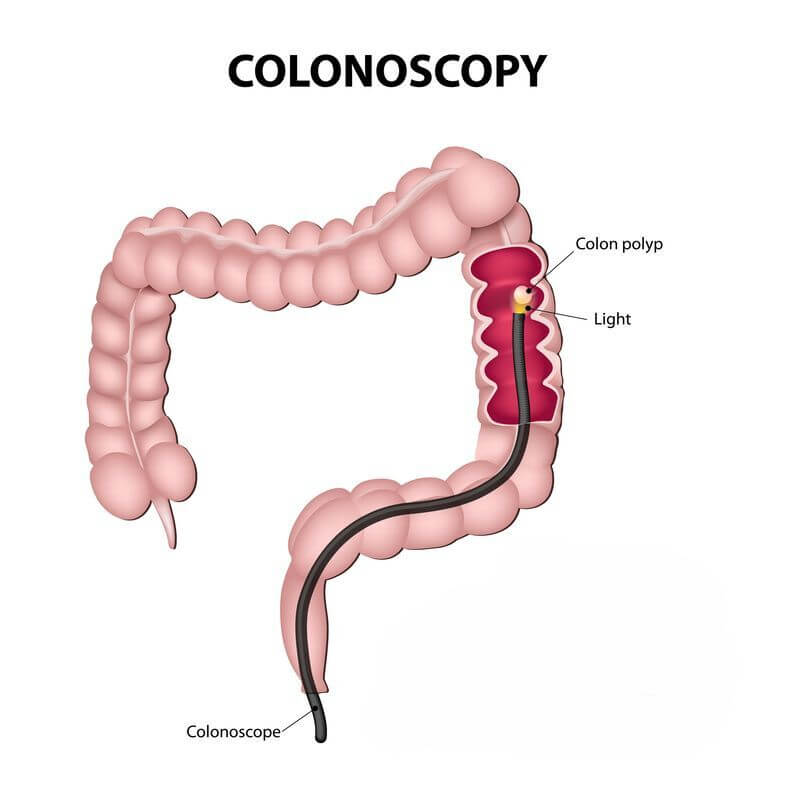
Lying on your left side, the colonoscope is carefully advanced through the entire colon. Carbon dioxide is used to gently inflate the bowel. The procedure typically takes 30 to 45 minutes.
Any polyps found can be removed immediately using snare polypectomy or biopsy forceps. Tissue samples are sent for histological analysis. In most cases, this is done at the same time with no additional procedure required.
After colonoscopy, you will be monitored in the recovery area until the effects of sedation have worn off. Most patients feel well enough to go home within one to two hours. Mild bloating or wind is common and settles quickly.
Mr Kumar will discuss the findings with you before you leave, including any biopsies taken or polyps removed.
Biopsy and polyp results are usually available within one to two weeks. You will be contacted with these results and a clear plan.
If polyps are removed or abnormalities found, appropriate surveillance or further management will be arranged.
Colonoscopy quality varies significantly between operators. Key quality indicators include caecal intubation rate (reaching the far end of the colon) and adenoma detection rate. Mr Kumar performs colonoscopy to the highest standard with excellent quality metrics.
High caecal intubation rate ensures the entire colon is examined, the standard of a high-quality colonoscopy.
Meticulous technique and careful inspection on withdrawal ensures polyps are not missed.
Private colonoscopy available within days, avoiding lengthy NHS waiting times for symptomatic patients.
Expert diagnostic and therapeutic colonoscopy with prompt access and clear results. Book a consultation with Mr Kumar today.
Colonoscopy Illustration
Procedure duration
Caecal intubation
Polyp removal
Results
Specialist opinion when it matters
Appointments typically within 3–5 working days.
Delivering high quality, patient-focused care
© 2025 West Midlands Surgical Centre. All rights reserved. · Privacy Policy · Terms & Conditions This website provides general information only and does not constitute medical advice. Always consult a qualified clinician.